Sewage Treatment Plant for Apartments in India
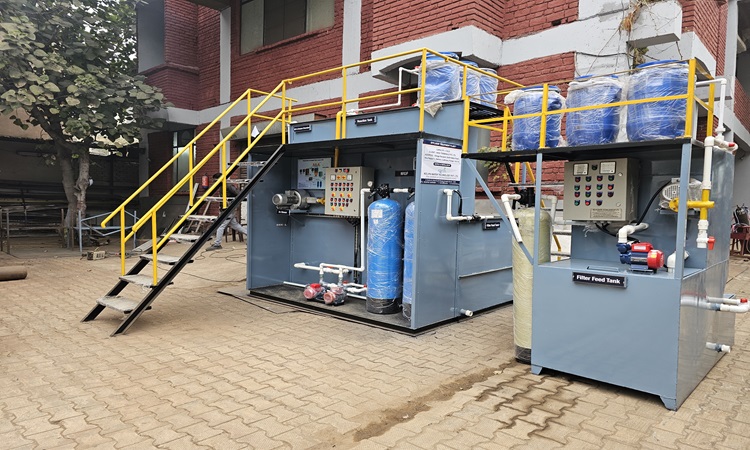
With rapid urbanization and escalating population density in Indian cities, the burden on public sanitation systems has grown dramatically. Nowhere is this more evident than in apartment complexes, where thousands of residents produce daily wastewater that can overwhelm municipal treatment capacity. In this backdrop, Sewage Treatment Plants have emerged as a critical infrastructure component — not an option but a necessity.
Why Sewage Treatment Plants Are Essential in Apartment Complexes?
Urban Water Stress & Waste Generation
India’s urban centers face severe water scarcity and sanitation challenges. A 100-flat apartment complex can generate 50,000 to 80,000 liters of sewage daily. Untreated discharge can pollute local water bodies, raise health risks, and violate environmental laws.
Regulatory Compliance
Central and state pollution control boards mandate onsite sewage treatment for residential townships and apartments to:
- Reduce contamination of rivers and lakes
- Prevent groundwater pollution
- Ensure safe reuse or disposal of treated water
What is a Sewage Treatment Plant?
A Sewage Treatment Plant is an engineered system that takes raw sewage from a building or group of buildings, processes it through physical, biological, and sometimes chemical stages, and produces treated water safe for reuse or discharge.
Core Objectives
- Remove solids, organic load, and pathogens
- Stabilize pollutants
- Reduce BOD (Biochemical Oxygen Demand) and COD (Chemical Oxygen Demand)
- Produce water suitable for reuse in landscaping, flushing, HVAC, or aquifer recharge
How STPs Work – Process Overview?
Although technologies vary, most apartment STPs in India use a combination of the following biological treatment processes:
Primary Treatment
– Screens and grit chambers remove large solids
– Settling tanks separate settleable organic matter
Secondary Biological Treatment
This removes dissolved organic content using microbial action.
- Activated Sludge Process (ASP) – Aerobically breaks down organics
- Sequencing Batch Reactor (SBR) – Time-sequential aeration and settling
- Moving Bed Biofilm Reactor (MBBR) – Biofilm carriers enhance degradation
- Extended Aeration – Low-load, long-retention biological process
Tertiary & Disinfection
Polishing steps may include:
- Sand/Activated carbon filters
- UV or Chlorine disinfection
- Nutrient removal (if required)
Sludge Handling
Excess biomass is thickened and dewatered for safe disposal.
Design Considerations for Apartment STPs
Choosing and sizing an STP requires careful engineering. Key factors include:
1. Population Equivalent
– Average persons × per capita sewage flow (135–180 L/person/day)
2. Space Availability
– Many complexes have limited land — compact systems like MBBR or SBR work better.
3. Discharge Quality Goals
– Reuse for flushing, gardening, cooling — may require enhanced tertiary treatment.
4. Power & O&M
– Efficient aeration systems reduce electricity bills and maintenance needs.
5. Future Expansion
– Facility should be scalable for additional towers or residents.
Benefits of Sewage Treatment Plants for Apartments
Environmental Benefits
✔ Reduced pollution load on water bodies
✔ Less groundwater contamination
✔ Decrease in freshwater extraction through reuse
Economic Benefits
✔ Lower water procurement costs via reuse
✔ Reduced sewage charges from municipalities
✔ Long-term asset value enhancement
Health & Safety
✔ Eliminates disease vectors
✔ Pathogen removal reduces infections
Community & Lifestyle
✔ Enhances sustainability credentials
✔ Residents gain assured water recycling
STP Performance Standards in India
The treated effluent from STPs must meet discharge norms set by the Central Pollution Control Board (CPCB) and respective State Pollution Control Boards. Typical standards include:
- BOD < 30 mg/L
- COD < 250 mg/L
- TSS < 30 mg/L
Kelvin Water Technologies — A Trusted Partner for Apartment STPs
When selecting an STP supplier and installer, reputation, technology, support, and outcomes matter. Kelvin Water Technologies has established itself as a leading choice for apartment wastewater solutions across India.
Who Are Kelvin Water Technologies?
Kelvin Water Technologies is a specialized manufacturer and provider of wastewater and sewage treatment solutions tailored for residential, commercial, and industrial customers. With years of experience, they deliver advanced STP systems designed to meet both regulatory requirements and long-term operational reliability.
Key Strengths of Kelvin Water Technologies
1. Customized Engineering
STPs are sized and configured based on:
- Apartment population
- Available space
- Desired effluent quality
- Reuse schemes
2. Advanced Treatment Technologies
Kelvin deploys modern biological processes such as:
- MBBR
- SBR
- Activated Sludge Variants
3. Quality & Compliance
All systems are engineered to achieve CPCB and local environmental compliance standards.
4. Operation & Maintenance Support
Kelvin doesn’t just install; it provides:
- Routine servicing
- Operator training
- Spare parts support
- Performance monitoring
5. Value Engineering
Kelvin focuses on energy-efficient designs to reduce long-term operating costs for residents.
Case Studies — STP Impact in Apartments
i) Enhanced Water Reuse
In multiple complexes, Kelvin-supplied STPs have enabled treated water reuse for:
- Toilets
- Gardening & landscaping
- HVAC cooling towers
This can slash freshwater consumption by up to 30–40%, a major win in water-stressed cities.
ii) Regulatory Compliance
Several homeowners’ associations (HOAs) have secured clearances from Pollution Control Boards based on Kelvin’s reliable STP installations.
Best Practices for Apartment STP Success
To maximize benefits and minimize issues:
✔ Choose the Right Technology
Match treatment type to flow profile and space.
✔ Plan for O&M
Contract skilled operators or opt for provider support plans.
✔ Budget for Power Efficiency
Low-energy blowers, optimized cycles reduce costs.
✔ Continuous Monitoring
Automated sensors and alarms help maintain effluent quality.
✔ Engage Residents
Awareness reduces misuse of STP (e.g., improper disposal of solids, oils).
Future of STPs in Indian Apartments
Urban wastewater recycling will grow as:
- Water scarcity deepens
- Regulations tighten
- Green building ratings penalize freshwater use
Conclusion
In India’s urban landscape, Sewage Treatment Plants are no longer optional add-ons — they are essential infrastructure for large apartment complexes. They protect the environment, cut water costs, ensure regulatory compliance, and elevate homeowner quality of life.
With the right technology, professional design, and proactive operation, apartments can transform wastewater from a liability into a resource for sustainable reuse.
Kelvin Water Technologies stands out as a trusted partner in this journey, offering engineered STP solutions that are efficient, compliant, and future-ready.