Waste Management Baling Press Machine in India
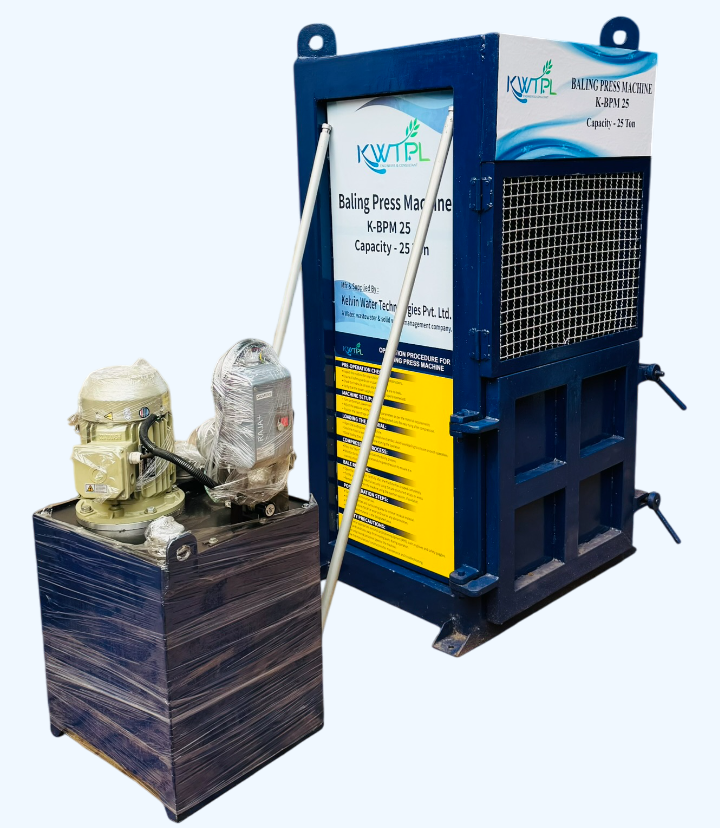
Waste management has evolved into a critical sector for sustainable development in India. Rapid urbanization, rising consumption patterns, and industrial growth have contributed to an exponential increase in both municipal solid waste (MSW) and industrial waste. Efficient handling, processing, and disposal of waste have become priority mandates under various environmental regulatory frameworks such as the Solid Waste Management Rules, 2016, and the Swachh Bharat Mission. Among the myriad technologies available, baling press machines have emerged as indispensable tools for waste compaction and recycling value-addition.
What is a Baling Press Machine?
A baling press machine is an industrial equipment used to compress, compact, and bundle waste materials into manageable bales. By reducing the volume of waste, it facilitates easier storage, transportation, recycling, and disposal. Baling machines are available in different configurations depending on the type of waste, throughput requirements, and automation levels — from manual horizontal balers to fully automatic vertical balers.
Key Features of Baling Press Machines
- High Compression Force: Generates powerful pressure to reduce bulky waste into dense, compact bales.
- Automatic Ejection: Many machines feature automatic bale ejection systems for continuous operation.
- Custom Bale Sizes: Adjustable to produce bales of different dimensions and weights based on customer requirements.
- Safety Mechanisms: Includes emergency stop, interlocks, and pressure sensors for secure operation.
- Energy Efficiency: Designed for optimized power usage and low operational cost.
Why Baling Machines Are Vital for Waste Management in India?
India generates over 150,000 tons of solid waste per day from urban centres alone, and only a fraction of this is treated or recycled. The rest ends up in landfills, open dumps, or illegal disposal sites, causing environmental pollution, greenhouse gas emissions, and public health hazards.
Baling press machines are central to modern waste handling for the following reasons:
1. Volume Reduction
Loose waste occupies significant space, raising transportation and disposal costs. Balers reduce the waste volume — in many cases by up to 90% — enabling efficient use of space at waste facilities.
2. Enhanced Recycling
Materials such as paper, cardboard, plastic, textiles, and metal scraps become easier to sort and sell to recyclers once compacted into uniform bales.
3. Cost Savings
Compacted waste reduces:
- Transportation trips
- Storage space requirement
- Labor costs for handling loose bulk
4. Cleaner Workplaces & Sites
Baling machines help maintain tidy waste yards, warehouses, and industrial facilities, thereby improving safety and operational workflows.
Types of Baling Press Machines Commonly Used in India
Depending on waste type and operational needs, the following baling press machines are widely deployed:
• Vertical Balers
Ideal for small to medium volumes of waste such as:
- Plastic films
- Cardboard boxes
- Paper sheets
• Horizontal Balers
Used for high-volume waste streams such as:
- Industrial plastics
- Textile waste
- Agricultural residues
• Fully Automatic Balers
Integrated with conveyors and sensors for:
- Continuous waste feed
- Fully automated baling cycles
- Minimal human intervention
• Mobile Balers
These compact units are mounted on trucks or trailers and can be easily moved across sites — especially useful for construction, large campuses, and segregated waste collection points.
Key Applications of Baling Machines in India
The versatility of baling machines makes them valuable across sectors:
1. Municipal Waste Management
Urban local bodies (ULBs) use balers to compact recyclables collected from households and public spaces. Baling enhances segregation efficiency and improves market value for recyclable materials.
2. Commercial & Retail
Shopping malls, supermarkets, and warehouses generate significant amounts of cardboard, plastic wrapping, and packaging waste. Balers help in managing this waste on-site.
3. Industrial & Manufacturing Units
Manufacturers generate various waste streams — including plastic off-cuts, paper waste, metal scraps, and textile trimmings. Baling machines help transform this waste into organized bales that can be sold to recyclers.
4. E-Waste & Scrap Processing
Electronic and electrical waste usually contains metals and plastics that, once segregated and baled, can be routed to specialized recycling channels.
How to Choose the Right Baling Press Machine?
Selecting the right baler depends on multiple factors:
• Type of Waste Material
The baler must be rated for the specific waste — e.g., plastics vs. paper vs. metal.
• Waste Volume
Small facilities may require vertical balers, whereas high-throughput units need horizontal or fully automatic balers.
• Bale Density & Size
Higher compression force yields denser bales, which are more cost-effective for logistics.
• Automation Level
From semi-automatic to fully automatic lines with conveyors and sensors — choose based on manpower and operational scale.
• After-Sales Support
Warranty, on-site installation, training, and spare parts availability are crucial in long-term operations.
Benefits of Baling Machines for Recycling Ecosystem
Baling press machines not only enhance waste management efficiency but also strengthen the recycling ecosystem:
- Creates Marketable Waste Commodities — Baled materials fetch better prices in recycling markets.
- Supports Circular Economy Goals — By improving material recovery rates.
- Reduces Landfill Loads — Less waste goes unprocessed.
- Encourages Source Segregation — Compact bales incentivize upstream segregation by waste generators.
Kelvin Water Technologies: Driving Sustainable Waste Management Solutions
Kelvin Water Technologies is a leading Indian environmental technology company specializing in zero waste management, wastewater treatment, and sustainable resource recovery systems. Known for innovation and engineering excellence, KWT offers tailored solutions that help industries, municipalities, and organizations achieve compliance with environmental norms while optimizing operational efficiencies.
Kelvin’s Role in Waste & Resource Management
While Kelvin Water Technologies is primarily recognized for its advanced wastewater treatment plants (STPs, ETPs, ZLD systems), the company is also a proactive participant in integrated waste management solutions, including:
• Baling Press Machine Implementation
KWT understands that solid waste and wastewater are interlinked challenges. Offering baling press machines as part of its comprehensive waste solutions enables clients to:
- Organize and compact recyclables
- Reduce environmental footprints
- Recover value from waste streams
Kelvin Water Technologies designs waste handling systems that can seamlessly integrate with balers, shredders, conveyors, and sorting lines to deliver end-to-end waste processing infrastructure.
• Customized Solutions for Indian Industries
KWT works across sectors such as:
- Manufacturing
- Textiles
- Pharmaceuticals
- Hospitality
- Municipal corporations
• Technology & Support Ecosystem
Kelvin provides:
- Installation & Commissioning
- Operator Training
- After-Sales Support
- Maintenance Contracts
- Spare Parts & Upgrades
Conclusion
Baling press machines are central to modern waste management strategies in India. They provide volume reduction, cost savings, recycling enhancement, and clean operations across municipal, commercial, and industrial sectors. As India accelerates toward ambitious environmental targets, balers — coupled with robust service partners like Kelvin Water Technologies — are vital tools in achieving efficient, compliant, and sustainable waste ecosystems.
By investing in reliable baling technology and integrating them with broader waste handling systems, businesses and municipalities can unlock economic value from waste while contributing significantly to cleaner, healthier communities.