Hydraulic Baling Press Machine in India
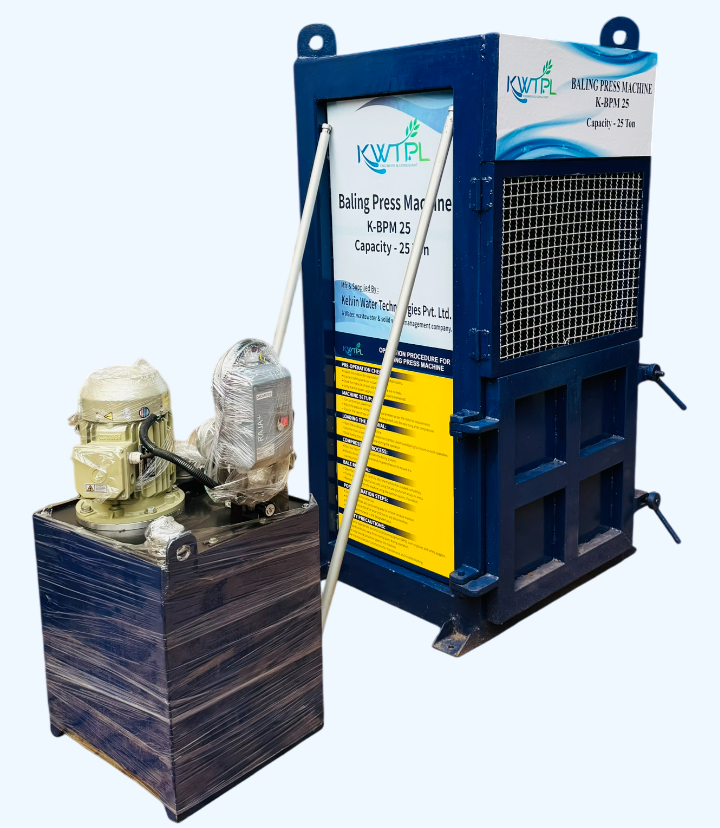
Hydraulic Baling Press Machine in India
Hydraulic baling press machines have become indispensable in India’s industrial and waste management sectors. These robust machines compress recyclable and non-recyclable materials into dense, manageable bales, optimizing storage, transportation, and recycling operations. As industries expand and environmental regulations tighten, hydraulic balers are transitioning from optional equipment to essential infrastructure across manufacturing, logistics, retail, and recycling units.
What Is a Hydraulic Baling Press Machine?
A hydraulic baling press machine is heavy-duty equipment that uses hydraulic pressure to compact loose waste materials into tight, bound bales. The key components include:
- Hydraulic Cylinders: Generate pressing force.
- Pressing Chamber: Where materials are loaded and compacted.
- Control Panel: For operating cycle settings.
- Tie/Strap Attachments: For securing compressed bales.
How It Works — The Operating Principle?
A typical hydraulic baler operates as follows:
- Loading: Loose waste (cardboard, plastics, paper, textiles, etc.) is fed into the baling chamber.
- Compaction: The hydraulic cylinder exerts high pressure through a ram plate, compressing material into a dense block.
- Binding: Once the material reaches targeted density, straps or wires are applied to secure the bale.
- Discharge: Finished bales are pushed out or manually removed for storage or dispatch.
Key Features and Specifications
Hydraulic balers are defined by several performance and design metrics:
- Pressing Force: Usually expressed in tons (e.g., 30T to 100T+).
- Bale Size: Varies by industry application (e.g., 600×800 mm to 1500×1200 mm).
- Cycle Time: Average compression cycle duration — shorter cycles improve throughput.
- Power Source: Typically electric motor driven (3-phase).
- Construction Material: Heavy gauge steel frames for durability and longevity.
- Control Systems: Manual to PLC automation with safety interlocks.
Common Materials Processed
Hydraulic baling presses handle a wide range of wastes:
- Paper & Cardboard: Corrugated boxes, office waste.
- Plastics: PET bottles, films, containers.
- Textiles: Fabric offcuts, garment waste.
- Foams & Rubber: Packaging foams, industrial scraps.
- Metals: Non-ferrous turnings, light aluminium scrap.
- Agricultural Waste: Bagasse, crop residues (in select applications).
Why Choose Hydraulic Over Mechanical Balers?
Hydraulic balers offer several advantages:
| Feature | Hydraulic Baler | Mechanical Baler |
| Compression Force | Very High | Moderate |
| Cycle Efficiency | Rapid & Consistent | Slower |
| Material Types | Wide Range | Usually lighter materials |
| Maintenance | Low (sealed systems) | Higher moving wear |
| Safety | Better controls | Basic safety interlocks |
Applications Across Indian Industries
a. Manufacturing & FMCG
Factories and consumer goods units generate significant packaging waste. Baling machines compress cartons, films, and plastics, reducing disposal costs and facilitating recycling.
b. Retail & E-Commerce
High volumes of cardboard and plastic packaging from logistics can be effectively managed with balers, creating organized, saleable bales for recycling vendors.
c. Recycling & Waste Management
Recycling businesses depend on uniform bales for efficient sorting, storage, and resale, making hydraulic balers central to operational workflows.
d. Textile & Apparel
In garment factories, textile offcuts and fabric waste are baled to recover value and minimize landfill burden.
Benefits of Using Hydraulic Baling Press Machine
Improved Space Utilization
Loose waste occupies more space than compressed bales. Hydraulic balers drastically reduce footprint requirements in yards and warehouses.
Reduced Transportation Costs
Dense bales lower volume, translating into fewer truckloads and reduced logistics costs.
Enhanced Revenue from Recyclables
Compact, uniform bales command better prices in secondary raw material markets.
Workplace Safety & Cleanliness
Organized waste handling reduces onsite hazards and promotes cleaner environments.
Regulatory Compliance
Helps businesses comply with India’s waste management guidelines, including extended producer responsibility (EPR) mandates on packaging waste recycling.
Market Landscape in India
India’s waste processing infrastructure is growing, supported by government regulations, private recycling investments, and corporate sustainability initiatives. Demand for industrial balers is increasing, particularly in metropolitan centers like Delhi NCR, Mumbai, Bengaluru, Chennai, and Ahmedabad where industrial output and e-commerce traffic are high.
Indian manufacturers offer a wide range of baling presses — from entry-level vertical balers to heavy horizontal hydraulic presses capable of continuous high-volume operation.
Choosing the Right Hydraulic Baler — Buyer Considerations
Selecting the proper baler involves evaluating:
- Material Type & Volume: Determines press capacity and chamber size.
- Available Floor Space: Vertical vs. horizontal configurations.
- Power Availability: Electrical infrastructure compatibility.
- Automation Needs: Manual vs. semi/fully automatic systems.
- Safety Standards: Compliance with Indian industrial safety norms.
About Kelvin Water Technologies
Kelvin Water Technologies is a prominent Indian company known for comprehensive solutions in water and waste management, including industrial wastewater treatment, zero waste recycling systems, and resource recovery installations.
While KWT’s core expertise lies in sewage treatment plants (STP), effluent treatment plants (ETP), and waste-to-resource technologies, the company’s integrated approach to sustainability often intersects with solid waste management and recycling ecosystem services, of which baling solutions are an integral component.
Kelvin’s Value Proposition:
- Sustainability Focus: Designs solutions that minimize environmental footprint and recover valuable resources from waste streams.
- Turnkey Implementation: Provides end-to-end project delivery — from design and installation to commissioning and after-sales support.
- Compliance & Standards: Ensures alignment with Indian environmental regulations and industrial quality benchmarks.
- Innovation & Customization: Tailors systems based on site-specific waste profiles, load variations, and operational goals.
Installation, Maintenance & Safety Best Practices
Installation
- Ensure a flat, reinforced floor.
- Provide adequate electrical supply and grounding.
- Maintain clear operational zones around the baler.
Routine Maintenance
- Check hydraulic fluid levels regularly.
- Inspect hoses, seals, and fittings for wear.
- Keep the pressing chamber clean to prevent jamming.
Safety Measures
- Install emergency stop controls.
- Train operators on safe loading and bale tying procedures.
- Use protective gear (gloves, safety boots, eyewear).
Future Trends in Baling Technology in India
India’s baling machine landscape is evolving with trends such as:
- Automation & IoT Integration: Real-time performance monitoring and predictive maintenance.
- Energy Efficiency: Drives and hydraulic systems designed for lower power consumption.
- Smart Sorting Interfaces: Integration with automated sorting lines.
- Modular & Scalable Systems: For expanding operations with minimal capital overhead.
Conclusion
Hydraulic baling press machines represent a significant value driver for Indian industries focused on waste minimization, operational efficiency, and environmental compliance. Their ability to transform loose, voluminous waste into compact, valuable bales not only simplifies waste handling but also enhances profitability through recycling channels.
When paired with holistic waste management solutions from experts like Kelvin Water Technologies, businesses can develop robust systems that integrate wastewater and solid waste treatment, resource recovery, and sustainability metrics — paving the way for greener industrial practices in India’s rapidly evolving economic landscape.