Horizontal Baling Press Machine in India
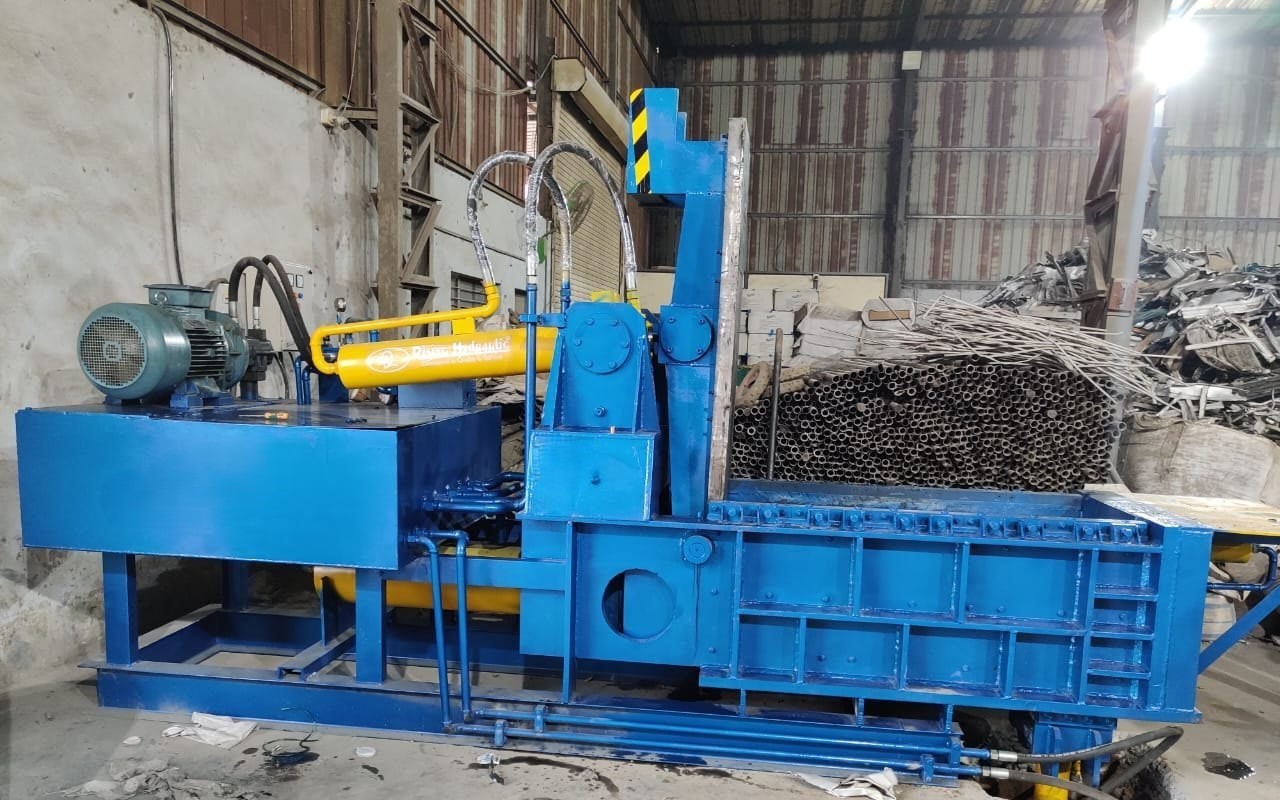
Horizontal baling press machines are heavy-duty industrial compactors designed to compress recyclable materials into dense, uniformly shaped bales for storage, transport, and recycling. In India, where industrial waste streams are expanding and recycling infrastructure is rapidly developing, horizontal balers play a vital role across paper mills, cardboard packaging units, textile mills, plastic recyclers, metal scrap yards, and e‑waste processors.
How a Horizontal Baler Works?
A horizontal baler compresses loose materials inside a horizontal chamber using a hydraulic ram. Material is loaded into the feed hopper or infeed conveyor; once the chamber reaches the target fill level, the ram compresses the charge under hydraulic pressure. The compressed material is then tied (manually or automatically) with wire, strapping, or twine and ejected as a bale. Compared to vertical balers, horizontal designs allow continuous feeding and are better suited for high-volume operations and long-fiber materials like cardboard.
Key Advantages for Indian Industry
- High Throughput: Horizontal balers are ideal for facilities generating large volumes of recyclables. Continuous feeding reduces cycle downtime and increases daily bale output.
- Consistent Bale Quality: They produce denser, more uniform bales that lower freight costs and improve handling efficiency at recycling plants.
- Versatility: Modern units can process paper, cardboard, PET bottles, LDPE film, textiles, agricultural waste, and non-ferrous scrap with appropriate configurations.
- Labor Efficiency: Automated tying and ejection reduce manual handling and accelerate processing lines.
- Improved Safety & Housekeeping: Enclosed compression chambers and automated controls minimize material spillage and worker exposure to dust and sharp objects.
Typical Technical Specifications to Consider
When choosing a horizontal baler for an Indian plant, compare the following specifications:
- Bale Size & Weight: Common sizes range from 600–1200 mm in width and 600–1500 mm in height; bale weights vary widely (50 kg to over 1,000 kg) depending on material and model.
- Tonnage (Compression Force): Measured in tons; higher tonnage yields denser bales for tougher or bulkier materials.
- Cycle Time: Faster cycles increase throughput; dependent on hydraulic capacity and feed method.
- Feed System: Manual hopper vs. conveyor-fed vs. auto-feed from shredders/compactors.
- Tying System: Manual wire tie, semi-automatic, or fully automatic strapping—automation reduces labor and increases consistency.
- Power Requirements: Voltage and motor ratings should match local plant power capabilities; phase balancing and proper electrical protection are essential.
- Controls & Safety: PLC-based controls, HMI touchscreen interfaces, emergency stops, interlocks, and light curtains are standard for modern installations.
Common Applications Across India
- Paper & Corrugated Industry: Cardboard and paper waste from box-making plants and warehouses.
- Plastic Recycling: PET bottles, HDPE jerrycans, and film waste desiccated into compact bales for pelletization.
- Textiles & Fibers: Offcuts and regenerated fibers baled for reuse or resale.
- Agricultural & Biomass Waste: Crop residues and bagasse compacted for transport or fuel processing.
- E‑Waste & Metal Scrap: Non-ferrous scraps can be pre-processed and baled for smelters.
Operational Best Practices
- Feed Consistency: Pre-sorting and shredding improve bale density and reduce hydraulic stress.
- Preventative Maintenance: Regular hydraulic oil checks, filter replacements, and inspection of wear parts (rams, wear plates, and tying heads) extend machine life.
- Operator Training: Trained operators improve throughput and safety—cover lock-out/tag-out procedures, safe clearing practices, and emergency protocols.
- Dust & Effluent Control: Install local dust extraction for dry materials; for wet or contaminated streams, manage leachate to prevent hydraulic contamination.
Choosing the Right Supplier in India
Selecting the right OEM or integrator is as important as choosing the right model. Look for:
- Proven local installations and references in your material category.
- Comprehensive after-sales support, spare parts availability, and fast service response.
- Willingness to provide site surveys, throughput calculations, and customized feed integration (conveyors, shredders, hoppers).
- Compliance with local electrical, safety, and environmental norms.
Kelvin Water Technologies — An Integrated Approach
Kelvin Water Technologies is widely known in India for its water and wastewater treatment solutions and zero-waste management initiatives. Leveraging its expertise in end‑to‑end waste processing, KWTPL also collaborates with industrial partners to supply and integrate material handling and baling solutions as part of broader zero-discharge and waste‑to‑resource projects.
For industrial clients seeking a holistic solution, KWTPL can align horizontal baling press systems with downstream processes such as segregation lines, shredders, compactors, and recyclers — ensuring that material conditioning, effluent handling, and process water management are all harmonized. This systems-level thinking reduces operational friction, minimizes cross-contamination between waste streams, and helps plants meet regulatory requirements for waste disposal and resource recovery.
Conclusion
Horizontal baling press machines are a cornerstone technology for industrial recycling and material management in India. Their high throughput, consistent bale quality, and integration potential make them ideal for medium-to-large operations across a variety of sectors. Choosing the right machine requires balancing bale size, compression force, feed method, and automation level. Working with integrators who understand the complete waste-management lifecycle — including water and effluent handling — can substantially increase uptime, reduce hidden costs, and improve overall sustainability. Kelvin Water Technologies is one such partner that connects baling equipment with wider zero-waste and wastewater solutions, helping Indian industries convert waste liabilities into recoverable resources.