Industrial Organic Waste Composter
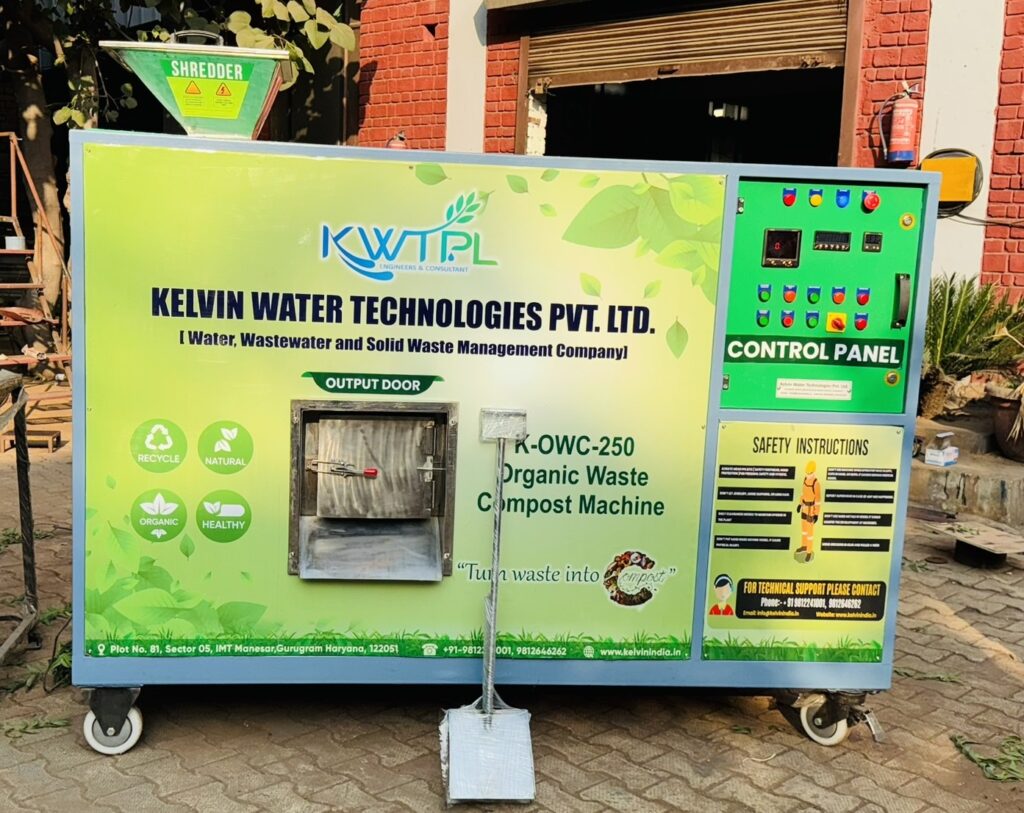
Industrial organic waste composting is rapidly becoming one of the most vital technologies in sustainable waste management. With the world generating billions of tonnes of solid waste every year — a large portion of which is biodegradable — industries, municipalities, institutions, and commercial hubs are turning to advanced composting solutions to efficiently convert organic waste into nutrient-rich compost. This transformation not only reduces landfill burdens but supports soil health, cuts waste management costs, and aligns with environmental compliance and sustainability goals.
What Is an Industrial Organic Waste Composter?
An industrial organic waste composter is a mechanical system designed to rapidly break down biodegradable organic waste — such as food scraps, garden and landscaping waste, agriculture residues, and other biodegradable materials — and convert it into compost, a valuable soil amendment.
Unlike traditional composting (which can take months), industrial composters use controlled biological processes augmented by heat, aeration, shredding, and automated monitoring to dramatically accelerate decomposition — often producing finished compost in 24–48 hours.
These systems offer a scalable way to manage large volumes of organic waste generated by industries, corporate facilities, campuses, hospitals, municipal programs, and food-processing units.
How Industrial Composters Work?
Industrial composters operate on the principle of enhanced aerobic decomposition, where microbes break down waste in the presence of oxygen.
Key Process Steps
- Segregation & Feeding: Organic waste is separated at source and fed into the composter — often after shredding to increase surface area.
- Shredding & Homogenization: Machines include in-built shredders that break waste into smaller pieces to improve microbial action.
- Temperature & Moisture Control: Sophisticated sensors monitor temperature, moisture, and aeration to maintain optimum conditions for microbes.
- Controlled Aerobic Decomposition: Forced aeration and mixing systems keep oxygen levels high, enabling fast and odour-free decomposition.
- Compost Output: Within a short time (often 24–48 hours in modern systems), the waste is transformed into dry, odourless, nutrient-rich compost — ready for application or sale.
Why Composting Organic Waste Matters Industrially?
a) Environmental Sustainability
Organic waste in landfills decomposes anaerobically (without oxygen), producing methane — a potent greenhouse gas. Composting, especially in controlled aerobic systems, prevents methane formation, thus mitigating climate change impacts.
b) Resource Recovery
Rather than treating waste as useless, composting transforms it into a valuable resource — nutrient-rich compost that enhances soil fertility, structure, and moisture retention.
c) Reduced Waste Management Costs
By processing waste on-site, organizations save on transportation, landfill tipping fees, and disposal costs. It also reduces labour and space requirements compared with traditional disposal techniques.
d) Compliance and Corporate Responsibility
Many environmental regulations now incentivize or mandate waste reduction and recycling. Industrial composters help organizations stay compliant, reduce environmental footprints, and fulfil CSR commitments.
Key Features of Modern Industrial Composters
Modern composting systems incorporate several smart technologies that make them efficient and user-friendly:
- PLC & HMI Control: Programmable Logic Controller (PLC) with Human-Machine Interface (HMI) for easy operation and monitoring.
- Sensor-based Monitoring: Real-time control of temperature, pH, moisture and aeration.
- In-built Shredders & Mixing Systems: Improve homogeneity and microbial access.
- Odor Control: Bio-filters and sealed designs reduce odours and improve workplace conditions.
- Compact & Scalable Footprint: From small installations to large industrial capacities (up to tons per day).
- Fast Turnaround: Compost produced in hours rather than weeks or months.
Industrial Applications of Composting Machines
Industrial organic waste composters have broad applicability:
- Food & Beverage Processing Units – handle kitchen and production scraps.
- Hospitals & Healthcare Facilities – manage food and organic refuse hygienically.
- Corporate Campuses & Institutions – reduce canteen waste management loads.
- Municipal Solid Waste Programs – large-scale deployments for town/city waste.
- Hotels, Restaurants, Malls & Airports – highly effective for daily biodegradable waste.
- Agriculture & Horticulture – produce fertilizer for crop fields and landscaping.
Kelvin Water Technologies: Industrial Composting Solutions
Kelvin Water Technologies Pvt. Ltd. is an Indian environmental engineering company with expertise in water, wastewater, and solid waste management systems, including industrial organic waste composters. They serve industries, commercial projects, municipalities, institutions, and residential facilities with turnkey sustainable solutions.
Their portfolio includes Organic Waste Composter Machines (OWC), natural composters, sewage treatment plants, effluent treatment plants, and other environmental technologies.
Kelvin’s Organic Waste Composter Product Range
Kelvin’s OWC machines are designed to meet diverse operational needs:
- Capacity Flexibility: From small units (25 kg/day) to industrial-scale models (up to 10,000 kg/day).
- Automation Levels: Available in fully automatic and semi-automatic configurations.
- Sturdy Construction: Stainless-steel body and tanks ensure durability and longevity.
- Sensor-Based Controls: Automated monitoring of moisture, pH, and temperature for optimal composting.
- Fast Processing: Volume reduction of up to 80–90% with high-quality compost output.
Technology and Innovation at Kelvin
Kelvin’s composting solutions incorporate several advanced technologies:
- PLC & HMI Interfaces allow automated operation with minimal manual intervention.
- Odor Control Systems maintain environmental comfort even during large-scale operations.
- Energy Efficiency reduces running costs and environmental impact.
- Custom Engineering & Turnkey Services — including design, manufacturing, installation, training, and after-sales support.
Advantages of Choosing Kelvin’s Composting Systems
a) Sustainability Impact
Kelvin’s systems help divert organic waste from landfills, thereby reducing greenhouse gas emissions and supporting circular economy principles.
b) Cost and Resource Savings
By converting organic waste on-site, organizations save disposal costs and can even monetize compost products.
c) Compliance & Safety
Their solutions comply with relevant waste management standards and ensure hygienic, pathogen-free operations.
d) Comprehensive Support
End-to-end services — from consulting and installation to maintenance and training — ensure smooth adoption and optimal long-term performance.
The Future of Industrial Composting
The global focus on sustainability, circular economies, and zero-waste goals is pushing industries and municipalities to adopt solutions like industrial composters. With technological advancements, these systems are becoming more efficient, automated, and cost-effective. Integrating composting into waste management programs not only aligns with environmental goals but strengthens corporate sustainability profiles.
Companies like Kelvin Water Technologies are central to this transformation by delivering innovative, scalable, and reliable composting solutions designed to tackle the diverse challenges of modern waste streams.
Conclusion
Industrial organic waste composters are more than just machines — they are foundational tools in the transition toward sustainable waste management. By converting organic refuse into valuable resources, reducing environmental footprints, and supporting regulatory and economic objectives, these systems redefine how businesses, cities, and communities handle waste.
Kelvin Water Technologies stands out as a trusted partner in this journey, offering advanced composting technologies backed by extensive industry experience, robust engineering, and turnkey services. Their solutions empower organizations to achieve operational efficiency, environmental compliance, and sustainable impact — making the vision of a cleaner, greener future a practical reality.