Easy Ways to Dispose of Waste in Hospitals: Keeping Healthcare Safe and Clean
Hospitals produce a lot of waste every day. Some of it is harmless, while some can spread diseases or harm the environment. It is very important to dispose of hospital waste properly to keep patients, healthcare workers, and the community safe. This article explains the different types of hospital waste, how to dispose of them, and the best ways to manage hospital waste safely.
Types of Hospital Waste
Hospital waste is divided into different categories based on what it contains and how dangerous it is:
- General Waste – Regular trash like paper, plastic, and food waste.
- Infectious Waste – Waste that contains bacteria or viruses, like used gloves, bandages, and tissues.
- Sharps Waste – Items like needles, blades, and broken glass that can cause cuts or injuries.
- Pharmaceutical Waste – Expired or unused medicines and vaccines.
- Chemical Waste – Harmful chemicals used in cleaning or laboratory tests.
- Radioactive Waste – Waste from treatments like radiation therapy.
- Pathological Waste – Human tissues, organs, or body parts removed during surgery or tests.
How to Dispose of Hospital Waste?
1. Separating Waste Using Different Bins
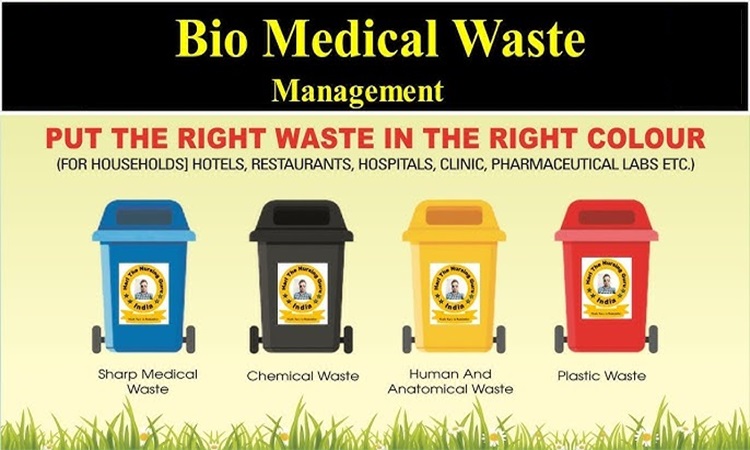
One of the most important steps is to separate waste at the source. Hospitals use color-coded bins:
- Red bins – For infectious waste.
- Yellow bins – For human tissues and expired medicines.
- Blue bins – For recyclable waste like plastic and glass.
- Black bins – For general trash.
- White or strong plastic containers – For sharp objects like needles and scalpels.
2. Steam Treatment (Autoclaving)
Infectious waste like used bandages and gloves can be treated using an autoclave. This is a machine that uses high-pressure steam to kill bacteria and viruses, making the waste safe before disposal.
3. Burning Waste (Incineration)
Some types of hospital waste, like human tissues and expired medicines, are burned at very high temperatures in an incinerator. This destroys harmful substances, but it must be done in a controlled way to avoid pollution
4. Using Microwaves to Kill Germs
Microwave treatment uses heat to kill bacteria and viruses in hospital waste. This is an eco-friendly method that does not produce harmful smoke or gases.
5. Chemical Treatment
Chemicals like chlorine or disinfectants are used to treat liquid medical waste, such as blood or body fluids. These chemicals kill bacteria before the waste is thrown away.
6. Sealing Waste in Containers (Encapsulation)
Sharp objects, medicines, and some chemicals are sealed in containers and covered with cement or other materials. This keeps dangerous substances from leaking into the environment.
7. Safe Landfills
Non-hazardous hospital waste can be thrown into sanitary landfills, which are specially designed to prevent waste from polluting the soil and water.
8. High-Temperature Waste Disposal (Plasma Gasification)
This is a modern method that breaks down waste using very high temperatures. It reduces waste volume and produces energy, but it is expensive and not widely used.
Best Practices for Hospital Waste Management
To improve hospital waste disposal, healthcare facilities should follow these best practices:
1. Have a Waste Management Plan – Hospitals should have a clear plan for handling and disposing of waste.
2. Train Healthcare Workers – Staff should be trained to properly separate and dispose of waste.
3. Use Safety Equipment – Workers handling waste should wear gloves, masks, and protective clothing.
4. Keep Records – Hospitals should maintain records of the waste they produce and how they dispose of it.
5. Reduce Waste – Using reusable medical supplies and avoiding unnecessary waste can help reduce waste production.
6. Regular Inspections – Checking waste management systems regularly ensures they work properly.
7. Work with Waste Disposal Companies – Licensed waste disposal services can help hospitals get rid of hazardous waste safely.
Challenges in Hospital Waste Disposal
Some hospitals face difficulties in properly managing waste due to:
- Lack of Awareness – Some healthcare workers do not know the correct way to handle waste.
- Limited Facilities – Some hospitals do not have modern equipment for waste disposal.
- Limited Facilities – Some hospitals do not have modern equipment for waste disposal.
- Strict Regulations – Hospitals must follow many rules to dispose of waste safely, which can be challenging.
Conclusion
Proper hospital waste disposal is essential for protecting people and the environment. Using methods like separating waste, autoclaving, incineration, and chemical treatment can ensure safe disposal. Hospitals should also follow best practices and invest in better waste management systems to improve safety and reduce environmental harm. Addressing challenges through education, better equipment, and cooperation with waste disposal companies can help make hospital waste management more effective and eco-friendlier.
| To use our services right now, you can call us at +91-9812241001 or send us an email at info@kelvinindia.in We will be delighted to assist you! |