Zero Discharge STP Solutions
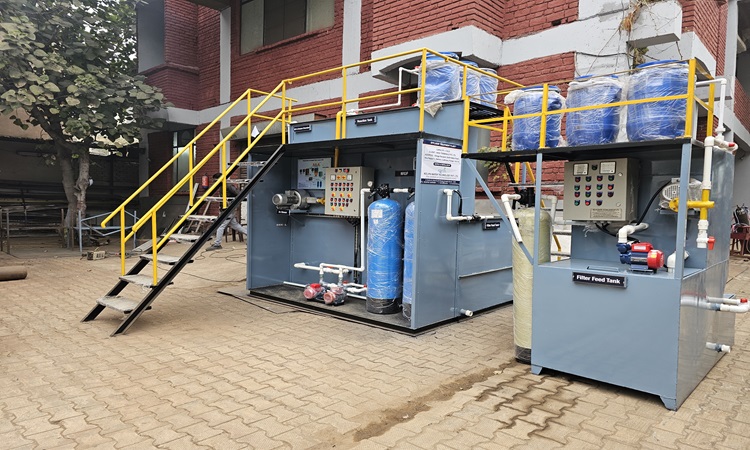
Zero discharge sewage treatment plant solutions are designed to treat wastewater to a standard where no liquid effluent is discharged to the environment — instead, treated water is reused on-site or fully recovered. With water scarcity, stricter discharge norms, and rising operational costs for freshwater, zero discharge has become more than an environmental ambition: it’s a resilient business strategy for industries, commercial complexes, hotels, campuses, and industrial parks.
What “Zero Discharge” means in practice?
Zero discharge doesn’t always imply 100% literal closure of all outlets; practically it means:
- Treated water is reused to meet on-site non-potable needs (cooling towers, HVAC make-up, landscape irrigation, process water, toilet flushing).
- Any residual concentrates (e.g., from RO or brine) are managed, minimized, and either evaporated, crystallized, or transported responsibly.
- No untreated or partially treated wastewater enters municipal drains, surface water, or groundwater.
Key components of a zero discharge STP system
A robust zero-discharge solution combines multiple treatment stages and resource recovery technologies:
- Pre-treatment & Primary Treatment: Screening, grit removal, equalization and primary settling to remove coarse solids and balance flows and loads.
- Biological Treatment: MBBR/IFAS/SBR/MBR depending on footprint and effluent quality targets. Membrane Biological Reactors (MBRs) are common for high-quality effluent with lower footprint.
- Tertiary Treatment: Sand/dual-media filtration, ultrafiltration (UF), or advanced oxidation for removal of fine suspended solids, turbidity, and organics.
- Advanced Treatment for Reuse: Reverse Osmosis (RO) for high-grade reuse (boiler feed, process water) or UV + chlorine for disinfection where lower-grade reuse is acceptable.
- Brine/Concentrate Management: Evaporation ponds, brine concentrators, forward osmosis, or zero-liquid discharge (ZLD) modules that crystallize salts — choice depends on volume and pollutant load.
- Sludge Management: Anaerobic digestion, thickening, dewatering and composting; recovered biosolids can be used as soil conditioners where permitted.
- Monitoring & Automation: Real-time sensors (pH, turbidity, TOC, conductivity), programmable logic controllers (PLCs), and SCADA for optimized operation and regulatory reporting.
Design considerations
- Water balance & reuse mapping: Identify all on-site demands and seasonal variations so treated water is matched to uses.
- Quality targets: Define required parameters (BOD, TSS, TDS, pathogens, conductivity) based on intended reuse — irrigation, cooling, or process.
- Footprint & modularity: Space constraints often favor MBRs and packaged modular units that scale.
- Energy optimization: Integrate energy recovery (biogas from sludge), variable speed drives for pumps, and energy-efficient aeration to lower lifecycle costs.
- Scalability & redundancy: Design for future expansion and include redundancy on critical units (e.g., parallel RO trains) to maintain zero discharge even during maintenance.
- Regulatory & safety: Comply with local reuse standards and occupational safety; ensure robust containment to avoid accidental overflows.
Operational strategies for maintaining zero discharge
- Preventive maintenance & automation: Automated cleaning cycles and predictive maintenance reduce downtime and unplanned discharges.
- Load management: Equalization tanks and buffer strategies help handle industrial surge loads without compromising effluent quality.
- Concentrate minimization: Using staged RO recovery, brine reduction strategies, and source separation can cut concentrate volumes significantly.
- Resource recovery mindset: Treat the system as a resource plant — recover water, energy (biogas), and nutrients (struvite) where feasible.
Benefits & business case
- Regulatory compliance & risk reduction: Eliminates non-compliance penalties and reduces environmental liability.
- Water cost savings: Reusing treated water reduces reliance on municipal supply and lowers water bills — significant over the plant lifecycle.
- Brand & ESG value: Demonstrates corporate responsibility and improves stakeholder perception; useful for sustainability reporting and green certifications.
- Operational resilience: On-site water independence reduces vulnerability to supply interruptions and seasonal shortages.
- Potential revenue streams: Sale of recovered water, carbon credits, or value from biosolids and nutrient recovery.
Challenges & how to address them
- High capital & energy costs: Offset through phased implementation, energy recovery (biogas), and selecting energy-efficient technologies.
- Concentrate disposal: Evaluate options — beneficial reuse, evaporation/crystallization, or safe off-site disposal — from the project’s start.
- Quality consistency: Use MBRs or advanced tertiary systems and tight process control to meet reuse standards consistently.
- Skilled operation: Invest in training, remote monitoring, and vendor-backed O&M contracts.
Kelvin Water Technologies — enabling zero discharge
Kelvin Water Technologies specializes in designing and supplying modular, scalable sewage and wastewater treatment systems tailored for zero discharge goals. Their approach typically includes:
- End-to-end design: From water balance studies and feasibility to full engineering and commissioning — ensuring systems are right-sized for on-site reuse demands.
- Modular packaged units: Compact MBR and MBBR based solutions for sites with limited footprint and phased capacity needs.
- Integration of ZLD/Concentrate management: Options for brine concentrators, evaporators, and crystallizers to minimize or eliminate liquid discharge where required.
- Automation & remote monitoring: PLC/SCADA setups that provide real-time process control, alarms, and reporting — important for consistent zero-discharge performance.
- O&M and lifecycle support: Service contracts, operator training, and spare-part strategies to keep systems performing and compliant over decades.
Practical roadmap to implementation
- Feasibility & water audit — Map inflows and potential reuse points.
- Define reuse quality — Match treatment train to demands (e.g., cooling vs. boiler feed).
- Pilot or demo — Trial key technologies (RO recovery, MBR) to validate performance.
- Detailed engineering & procurement — Focus on modular, scalable units with energy efficiency.
- Installation & commissioning — Ensure staff training and performance guarantees.
- Ongoing optimization — Use data analytics and preventive maintenance to sustain zero discharge.
Conclusion
Zero discharge STP solutions are a strategic investment that protect the environment, comply with regulations, and deliver measurable operational savings. Success depends on integrated design — from biological treatment to concentrate management — and disciplined operation. Providers like Kelvin Water Technologies bring the technical expertise, modular products, and lifecycle support required to implement pragmatic zero-discharge systems that transform wastewater into a reliable on-site resource.